Outreach and Service in Macon
Volunteering in Macon
Where hands are needed around Macon: food banks, river and trail cleanups, historic preservation and one-day service projects.
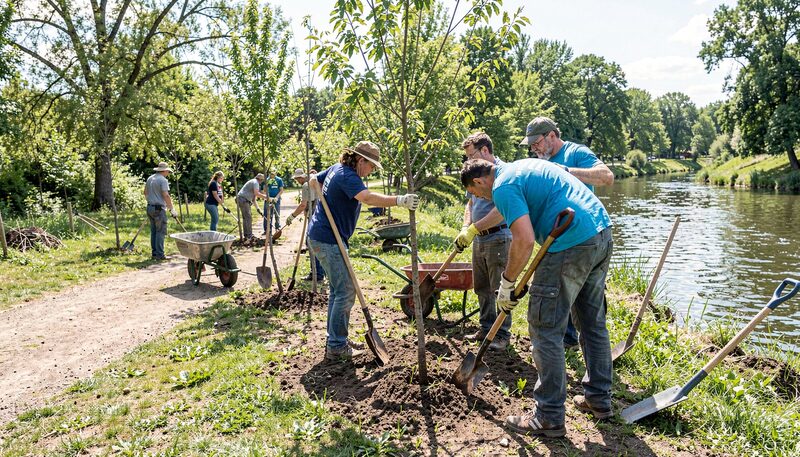
Macon runs on volunteers the way other cities run on transit systems. The cherry blossom festival that fills the town each spring, the food bank warehouse that stocks a hundred pantries, the river cleanups, the museum desks and the reading circles, none of it happens without people who show up for nothing. For a newcomer, or for a longtime resident whose children have left the house, the volunteer economy of Middle Georgia is the fastest way into the life of the city, faster than any membership committee. This article maps the main territory and explains how to start with one shift rather than a lifestyle.
Where are the hunger and shelter shifts?
The largest single channel is the food bank network. The Middle Georgia food bank, the Feeding America member serving the region, runs warehouse shifts in which volunteers sort, inspect and box donated food for distribution to partner pantries across dozens of counties; the work is physical, scheduled in blocks, and open to individuals and groups alike. Downstream sit the congregation pantries described in the article on church food and clothing pantries, each needing weekly crews. Shelter and meal work adds the evening side of the calendar: soup kitchens serving hot plates, cold-weather shelters that open when the forecast turns, and the transitional housing ministries that always need drivers and tutors. Hunger volunteering has the shortest onboarding in the city, which is why it is the right first shift.
What about the river, the parks and the trees?
Macon's geography gives its volunteers a landscape to work on. The Ocmulgee River and its tributaries draw cleanup crews who walk banks and pull tires; watershed groups and county programs organize the days and supply the bags. Park projects, from mulching playgrounds to planting shade trees, run through city and county volunteer programs, and the national park on the city's east side, Ocmulgee Mounds National Historical Park, whose story is told at nps.gov/ocmu, engages volunteers in the way national parks everywhere do, from trail work to interpretation. Tree planting deserves its own mention: Macon's identity is literally arboreal, the city having planted Yoshino cherries by the thousands since the 1970s, and the volunteer crews that maintain that canopy are continuing the city's own best idea.
What does historic preservation volunteering look like?
Macon keeps one of the deeper historic building stocks in Georgia, and much of its care is volunteer-fed. The local preservation foundation runs work days on endangered properties, from cemetery cleanups to house stabilization, and cemetery work in particular, straightening, cleaning and recording stones in the city's historic burying grounds, has become a satisfying craft for a steady crew of Macon volunteers. Museum docent programs train guides for the house museums downtown. The skills taught are real, masonry cleaning, archival handling, and the work leaves a visible result, which is more than most committee meetings can say. The congregation history side of the city's past, covered in the article on the history of Redeemer, feeds the same archives that preservation volunteers help maintain.
Can volunteering center on children and schools?
The schools welcome the help, formally and informally. Reading-buddy programs pair an adult with a student for a weekly half hour; mentoring organizations in Macon run background-checked programs that ask for a school year of Tuesdays; and the backpack programs described alongside pantry work in this magazine's outreach section send weekend food home through the schools quietly. Attendance at school concerts, games and science fairs is volunteering of a kind, since a room full of adults watching children perform changes what the children believe about themselves. A year of one lunch hour a week is the standard unit, and the demand exceeds the supply every single autumn.
What are the one-day service events?
For the uncommitted, the calendar supplies single days. The Martin Luther King Jr. day of service in January, the April earth day cleanups, the September volunteering fairs, and the cherry blossom festival each spring, which fields hundreds of volunteers for everything from directing tour buses to seating concert audiences. One-day events serve as tryouts: a volunteer who enjoyed the river cleanup meets the group that runs the monthly version. The festival, formally the International Cherry Blossom Festival, is the city's largest recurring deployment and the friendliest possible introduction to working a crowd; veterans describe it as the city's annual open house, staffed by its neighbors.
What about skilled and weekday volunteering?
The economy's second half runs on skills. Nonprofit boards need accountants; repair ministries need licensed trades; food drives need drivers with trucks; elder ministries need drivers, period, since transportation is the quiet bottleneck of aging in a city built for cars. Pro bono professional service, legal clinics, tax preparation help in the season, financial counseling, is brokered through the agencies that need it, and a volunteer who names a profession will be routed to where it counts. Weekday-morning volunteers are the scarcest resource in the local economy and the most celebrated when they appear.
How should a new volunteer start?
With one shift, chosen by calendar rather than by cause. Pick a free Saturday, pick the nearest of the options above, and show up once; every program in this article accepts a first-timer without a form longer than a waiver. The second shift decides more than the first, and by the third the volunteer has a crew. Readers who want the congregational angle on the same territory can read the article on getting involved in a congregation, since church crews staff a fair share of the city's volunteer calendar, or write to this magazine through the contact page to suggest a program that belongs on a future map. Macon's volunteer economy has one standing rule: it is easier to get in than anyone expects.
Read next
Outreach and Service in Macon
Outreach and Service in Macon
Food and clothing pantries, volunteering across Middle Georgia and the stewardship that pays for congregation outreach.
Pantries, volunteering and the money that funds congregation work.
Outreach and Service in Macon
Food and Clothing Pantries
How congregation pantries work: opening hours, eligibility, the donations that truly help and what a pantry week looks like.
How a pantry week runs, for users and for donors.
Lutheran Faith and Worship
What Lutherans Believe
A plain introduction to Lutheran belief: grace alone, faith alone, scripture, baptism and holy communion in the Small Catechism.
Grace alone, faith alone, scripture alone, in plain words.