Outreach and Service in Macon
Food and Clothing Pantries
How congregation pantries work: opening hours, eligibility, the donations that truly help and what a pantry week looks like.
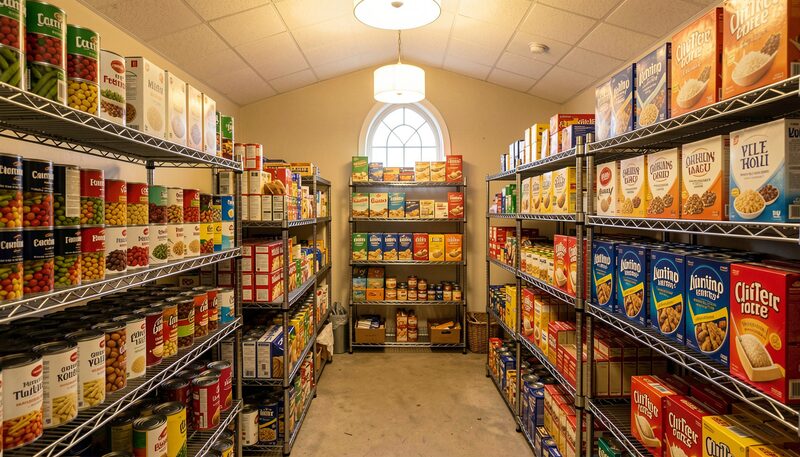
Behind a fair number of Macon church buildings sits a room the sanctuary never mentions: metal shelves of canned corn, boxes of cereal sorted by date, and racks of folded shirts in the aisle where a Sunday school class met in 1985. The congregation food and clothing pantry is among the oldest continuous institutions in the city, older than most of the agencies now funded to do similar work, and it runs on the same design almost everywhere: a donated room, donated goods, and a rotation of volunteers who sort, date and hand out. This article explains how such a pantry works, who can use one, and what donors and volunteers should actually do.
Why do congregations keep pantries?
The reason is theological before it is civic. Feeding the hungry is one of the plainest instructions in the Christian scriptures, listed by Jesus himself in the judgment scene of Matthew 25, and congregations of every tradition in Middle Georgia treat a pantry as obedience rather than public relations. The civic need is real alongside it: food insecurity runs through every county in Georgia, rural and urban alike, and the households it touches are most often working households whose wages and benefits do not stretch across an expensive month. A congregation pantry sits closer to the need than most institutions, open on a church street with no lobby in between, and neighbors have long known which door to knock on.
How does a pantry week actually run?
The week has a rhythm. Donations arrive from Sunday members and from food drives at schools, post offices and scouts. A volunteer crew, often the women's circle or the men's breakfast crew described in the article on adult education and small groups, sorts and dates everything, because expired stock and dented cans are the quiet failure of careless pantries. Stock rotates first-in-first-out; shelves get labeled; the freezer, if there is one, holds bread and rescued meat. Distribution day runs on a table or a queue: households register briefly, receive a box or a cart assembled to household size, and carry it out. Between the two ends sits the unglamorous middle, the ordering, the weighing of totals, the monthly report, which is what separates a pantry from a closet.
Who can use a church pantry?
The honest general answer is anyone who asks, with two practical caveats. First, every pantry sets its own boundaries, by service area, by household frequency or by referral, usually monthly visits per household; the boundaries stretch in emergencies and nobody is turned away from a first visit for paperwork. Second, congregational pantries cooperate rather than compete: most hold hours on different weekdays precisely so that the network of churches in a neighborhood functions as one pantry with many doors. No membership, no church attendance, no profession of faith is required at any reputable congregation pantry in Macon; requiring them would defeat the theology. Identification for the household count is the most a visitor should expect to show, and a pantry that demands more than that is asking for a reason this magazine would print.
What donations actually help?
Pantry coordinators publish the same short list every year. Sturdy staples in cans and boxes, peanut butter, rice, pasta, beans, canned protein and fruit, cereal, shelf-stable milk; household paper and soap, which no food stamp program buys and every household needs; and baby supplies. The least helpful donations are the fashionable ones: half-empty jars, exotic glass, anything in a torn box, and the expired can from the back of a cabinet, all of which cost a volunteer an hour to sort and discard. Clothing follows its own rules: seasonally current, clean, folded, sized, in bags a volunteer can lift, and a phone call before a vanload, because closet space is the binding constraint. The article on giving and stewardship adds the financial point: a dollar given to the pantry's food bank channel buys several cans' worth at wholesale, which is why coordinators say money is the most useful donation of all.
Where does the food come from?
Congregation pantries in Middle Georgia draw on three sources. Members donate steadily, the tax-basis of the system. Community food drives, the postal workers' drive each spring and the school holiday drives, arrive in seasonal waves. And the food bank network supplies the volume: the Middle Georgia food bank, a member of the national Feeding America network whose hunger statistics are published at feedingamerica.org, moves tractor-trailer quantities of donated and purchased food to partner pantries across the region at pennies on the retail pound. A congregation pantry affiliated with the food bank shops that warehouse weekly, which is how a room with a donated freezer feeds a thousand households a year.
What happens at a clothing closet?
The clothing side of the pantry runs on the same skeleton with softer logistics. A room of racks, sorted by type and size; a check-in that counts items taken so the totals can be reported; and a dressing corner. Demand concentrates in three seasons, school clothes in August, coats by the first cold snap, and holiday outfits in December, and a closet that plans for those three waves is a good closet. Work clothing occupies its own rack, since interview and first-week-on-the-job clothing changes incomes rather than just comfort. Volunteers who can sew a hem or replace a button are worth their weight in donations.
What lies beyond the box of food?
The better pantries keep adding layers. No-cook bags for households with no stove; weekend backpack programs that quietly send food home with schoolchildren on Fridays; holiday meal boxes in November; and a referral shelf of flyers, since the household standing at the pantry table often needs the utility assistance office more than the green beans. The pantry volunteer who learns the city's assistance map becomes the most useful person in the building, and the article on volunteering in Macon maps the wider territory. The rule the good pantries teach is that the food is the door, not the house.
How does someone volunteer or ask for help?
Both questions have the same answer: the church office, by phone in the week, or the pantry door on distribution morning. Volunteers are trained in an hour and paired for a first shift, and the work is squarely physical, standing, lifting, carrying boxes, which the article on getting involved in a congregation counts among the honest ways to belong. Households needing food should simply come at the listed hour, no preparation and no story required. The pantry tradition of Macon congregations is old, unglamorous and load-bearing, and it runs the same way every week: a shelf, a box, and a door that opens from the inside.
Read next
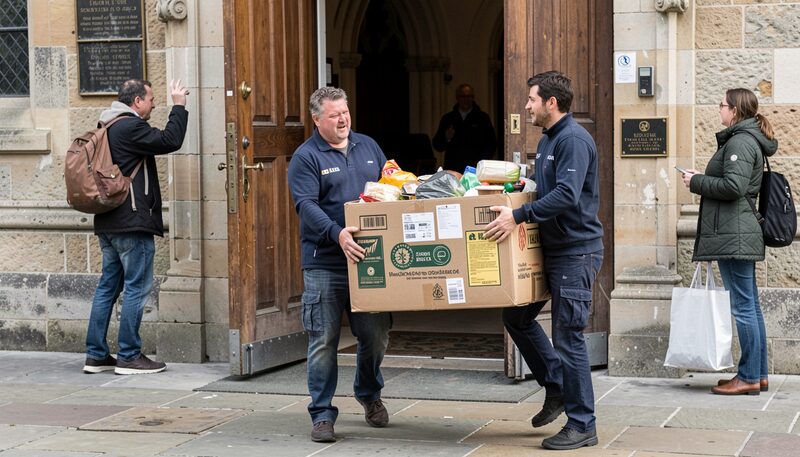
Outreach and Service in Macon
Outreach and Service in Macon
Food and clothing pantries, volunteering across Middle Georgia and the stewardship that pays for congregation outreach.
Pantries, volunteering and the money that funds congregation work.
Outreach and Service in Macon
Volunteering in Macon
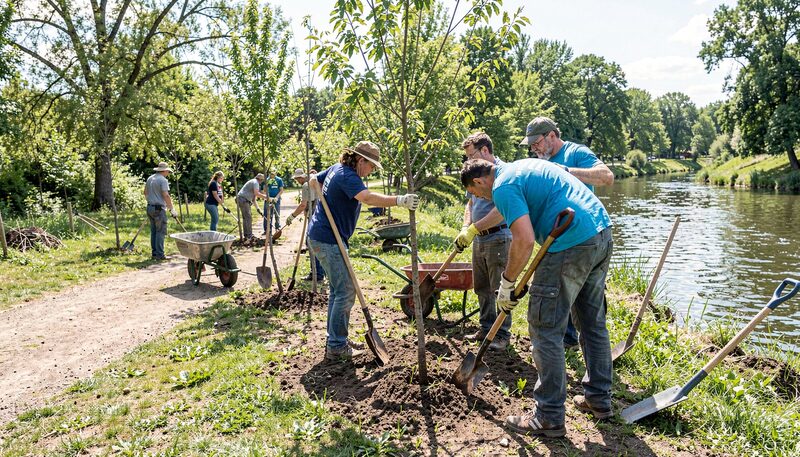
Where hands are needed around Macon: food banks, river and trail cleanups, historic preservation and one-day service projects.
Food banks, river cleanups, preservation crews and one-day projects.
Lutheran Faith and Worship
What Lutherans Believe
A plain introduction to Lutheran belief: grace alone, faith alone, scripture, baptism and holy communion in the Small Catechism.
Grace alone, faith alone, scripture alone, in plain words.