Congregation and Family Life
A First Visit to a Church
Arriving, parking, what to wear, communion practice and the coffee hour after the service: a calm walkthrough for new visitors.
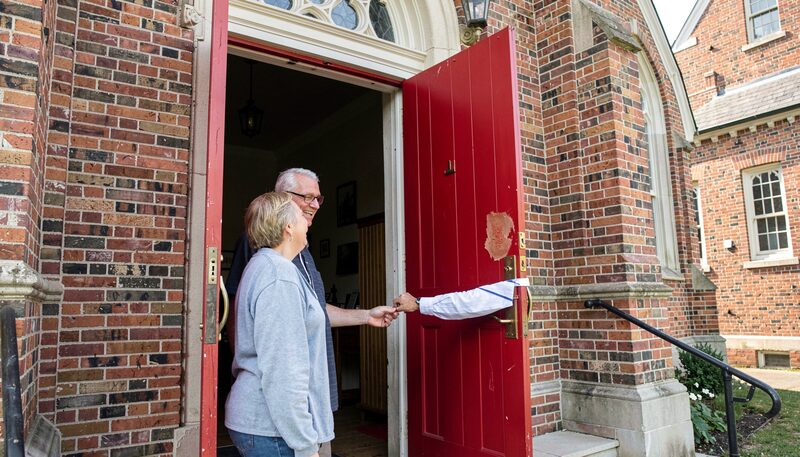
The hardest visit to any church is the first one. Not because anything difficult happens inside, but because the visitor cannot know that in advance: the door, the timing, the offering plate and the communion rail all carry rules nobody posts. This article walks through a first Sunday morning in a Macon-area congregation step by step, so that the only surprise left is the sermon. It is written for newcomers to the city, for the returning, and for the curious who last entered a sanctuary for a funeral.
How does a visitor pick a Sunday?
Any Sunday works, but a little calendar sense helps. Festival Sundays, Christmas and Easter and the surrounding weeks, bring crowds, extra music and longer services; a visitor blends in easily but sees the congregation in its holiday clothes rather than its ordinary ones. Ordinary Sundays show the real week, and congregations are at their most themselves in late summer. Times matter more than dates: congregations list a single morning service or several, and checking the congregation's own listing the day before avoids the classic mistake of arriving at the hour printed on a sign board years out of date. Arriving ten minutes early is the single best move a visitor can make; it converts the whole morning from a scramble to an observation.
What should a visitor wear?
In Middle Georgia the honest answer is less than a visitor fears. Sunday dress in Macon congregations ranges from coats to clean jeans, and the reliable middle is business casual: slacks or a simple dress, closed shoes, nothing that requires adjustment. Summer changes the arithmetic, since Georgia heat defeats formality by July, and no congregation worth visiting measures anyone by fabric. The older advice to overdress slightly still holds, less for the room's opinion than for the visitor's own confidence. Ushers notice a face they do not know; they do not notice shoes.
What happens at the door?
A greeter or usher holds the main door and hands over the service folder, the single sheet or booklet that runs the whole hour. The folder names the hymnal in the pew rack, prints page and hymn numbers, and lists whatever communion instructions apply. Visitors are welcomed, asked nothing, and pointed toward seating. Name tags are common at the coffee hour afterward, not usually at the door. A visitor who wants to be invisible can be; a visitor who says it is a first visit will be introduced to somebody within minutes, because congregations assign that duty to their friendliest members by instinct if not by committee. Parents with children can ask at the door where the nursery and Sunday school rooms are; the details of the children's programs are covered at length in the article on children and family ministries.
Where should a first-time visitor sit?
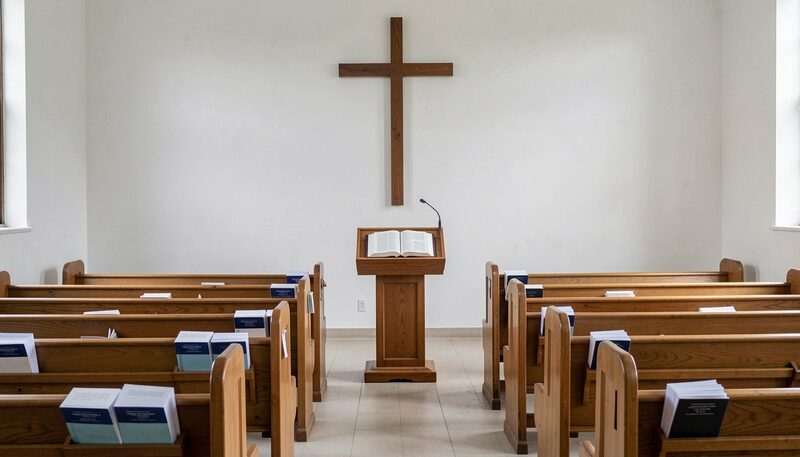
Anywhere. Regulars own no seats, whatever the folklore says, though the back rows of most sanctuaries do hold the late and the new. Sitting toward the back on a first visit gives a full view of the room, quick exit access for a restless child, and a vantage on when the assembly stands, which solves the visitor's chief anxiety at a stroke: watch the room, and do what it does. Hymnals are in the rack with service folders tucked beside them; the visitor needs the numbers printed in the folder and nothing else. The kneeling, sitting, standing rhythm of the liturgy is described plainly in the article on the order of a Lutheran service, and it is the same logic in every liturgical tradition.
What happens when the offering plate comes?
Two baskets or plates pass down each pew during the offertory, and the etiquette is simpler than it looks: visitors give nothing. Members support the congregation's budget; guests are guests. A plate passed hand to hand simply continues on its way when a visitor holds it a second and lets it move. Passing the plate is not a tollbooth and no usher counts. The same logic covers the peace, the minute of handshaking midway through the service: a visitor shakes the nearest hands, says peace be with you if moved, and sits back down. Nobody remembers who said what.
What does a visitor do at communion?
The communion question carries the most first-visit anxiety, and the answer is printed in most folders. In congregations of the Evangelical Lutheran Church in America, all baptized Christians are welcome at the table, a practice called an open table, and the folder says so; the belief behind the meal is laid out in the article on what Lutherans believe. Visitors from traditions with closed communion, or none, may stay seated in the pew, and staying seated is entirely ordinary: the row empties, the row refills, and the service continues without remark. A crossed-arms posture at the rail brings a brief blessing instead of the bread. Children follow their parents' congregational practice, and the folder or an usher settles any question in a whisper.
What happens after the service?
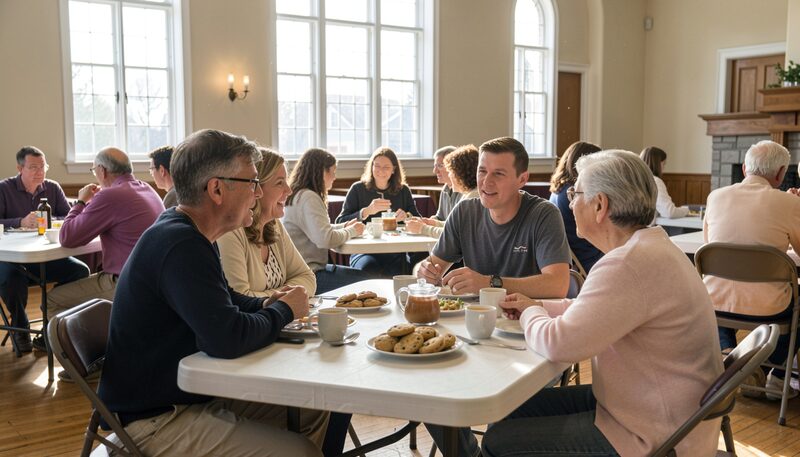
The benediction ends the service and the coffee hour begins, in the fellowship hall or the parish house, signaled by the entire congregation standing up and not leaving. This is the social half hour of the congregation, and the visitor's presence is the main event. Cookies, percolator coffee, and conversations about the week; someone will bring the visitor a cup before asking for one. Guest books or connection cards circulate, voluntary as everything else. The visitor who must leave immediately loses nothing; the visitor who stays ten minutes usually learns more about the congregation than the sermon taught. The pattern extends across the whole city, which is one reason the article on congregation and family life treats the coffee hour as seriously as the sanctuary hour.
Should a visitor come back, and then what?
Congregation-watchers advise two or three visits before any verdict, since a single Sunday samples a small congregation's whole personality at random. After a few mornings, the next questions are practical ones: the adult classes described in adult education and small groups, the volunteering paths in getting involved in a congregation, or simply a quiet conversation with the pastor, which every congregation makes easy to arrange. First visits end the same way most Sundays do: with a drive home and a private opinion. The only professional advice this magazine adds is to keep the folder; it answers half the second visit's questions before they form.
Read next
Congregation and Family Life
Congregation and Family Life
Children and family ministries, first visits, adult study groups and the small steps that turn Sunday visitors into members.
Family ministries, first visits, study groups, and the path to belonging.

Congregation and Family Life
Children and Family Ministries
What church programs offer families: Sunday school, children's music, youth groups and seasons such as vacation Bible school.
Sunday school, children's music, youth groups and vacation Bible school.
Lutheran Faith and Worship
What Lutherans Believe
A plain introduction to Lutheran belief: grace alone, faith alone, scripture, baptism and holy communion in the Small Catechism.
Grace alone, faith alone, scripture alone, in plain words.