Lutheran Faith and Worship
Inside a Lutheran Sunday Service
The shape of Lutheran worship from opening hymn to benediction: confession, word, sermon, creed, prayers and holy communion.
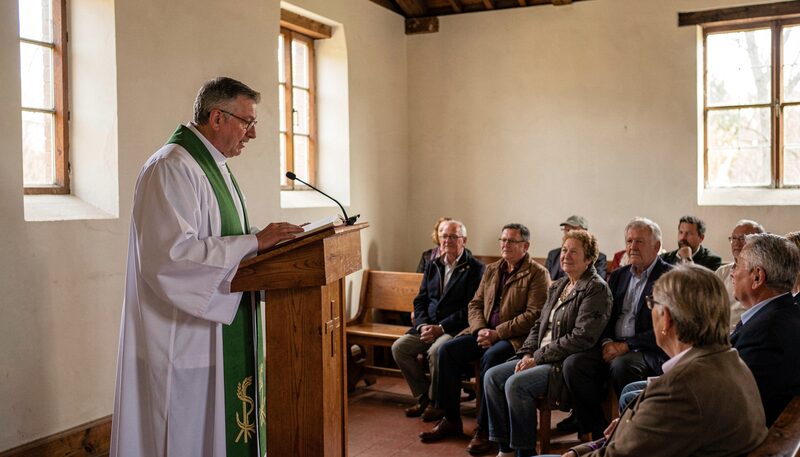
A visitor walking into a Lutheran service for the first time usually notices the order before anything else. People know when to stand, when to sit, when a spoken response is coming. The printed folder gives page numbers for a hymnal, and the room moves through the same shape week after week. That shape, the liturgy, is not decoration. The word comes from Greek and means the work of the people, and in a Lutheran congregation the people do most of the speaking and all of the singing. This article walks through a standard Sunday service from the first minutes to the benediction, so that nothing on the page surprises a newcomer.
What are the four movements of the service?
Lutheran worship organizes an hour into four movements: gathering, word, meal and sending. The gathering assembles the scattered week into one room and sets it right with confession and forgiveness. The service of the word pours out readings, psalm, sermon, creed and prayers. The service of the meal, holy communion, centers the table of bread and wine. The sending hands the congregation back its weekdays with a blessing. Not every Sunday includes communion, and services on weekday festivals run shorter, but the skeleton holds. A reader who wants the belief behind the meal can start with what Lutherans believe; this page stays with the choreography.
What happens before the first hymn?
The prelude begins five or ten minutes before the listed hour, an organ or piano piece that quiets the room without demanding anything from it. The minutes before a Lutheran service are notably soft-spoken; greetings happen in the pews at a murmur. Then the service opens with a brief confession and forgiveness. The assembly kneels or sits, admits in unison that it has fallen short in thought, word and deed, and hears the presiding pastor declare forgiveness. Lutherans take this opening seriously: the room does not rehearse its achievements before approaching God, it lays them down. A visitor who prefers to stay silent through this exchange loses nothing by listening.
How does the service of the word unfold?
After a hymn of praise, the service of the word begins, and it is built around four readings: one from the Old Testament, a psalm sung or spoken responsively, one from the epistles, and one from the four gospels, read last and greeted standing. The readings come from the Revised Common Lectionary, a three-year cycle of assigned texts shared across many denominations, so that on a given Sunday Lutheran, Methodist, Presbyterian and Roman Catholic congregations hear substantially the same passages. The sermon follows, typically ten to fifteen minutes in a middle-Georgia congregation, usually working the gospel reading rather than a topic of the week. Preaching in this tradition explains the text and presses it into ordinary life, and it ends by handing the hearers back to God's promise rather than to a to-do list.
Why does the room keep standing, sitting and kneeling?
The posture changes have a logic. The assembly stands to sing and to speak together, sits to receive teaching, and kneels, where kneelers exist, for confession and prayer. Between the sermon and the prayers comes the creed, most Sundays the Nicene Creed, an ancient summary of faith that the whole room says at once. The prayers of intercession follow a steady pattern: the church, the world, the sick, the dead, and the local community, with responses sung or spoken after each bid. Then the assembly passes the peace, a handshake or an embrace with the words peace be with you, which strikes newcomers as a social minute but functions as reconciliation before the meal. In a room that has just prayed together for the sick, the peace is where the prayers grow hands.
What happens at holy communion?
The table is set while the offering is gathered, and the great thanksgiving begins: a dialogue, a preface, a sung sanctus, and the eucharistic prayer that retells God's saving work and asks the Spirit to bless the meal. The congregation says the Lord's Prayer together, then communion is distributed. Visitors should expect either small glasses served in trays, with wine and often grape juice, or intinction, dipping the bread into a common cup. Everyone baptized and welcome at the Lord's table in their own congregation is welcome at an ELCA table, including children who have received instruction; anyone who prefers a blessing instead of the bread simply crosses their arms over the chest, and the minister prays quietly. Gluten-free wafers and grape juice have become ordinary provisions in Middle Georgia congregations. The meal closes with a brief prayer and, in most parishes, a table blessing spoken over the room.
How does the service end?
The sending is short: a benediction, the blessing spoken over the assembly with raised hands, a sending hymn, and a dismissal line such as go in peace, serve the Lord, to which the room answers thanks be to God. Then comes the part no folder prints, the coffee hour. Folding tables go up in the fellowship hall, and the congregation stands around cookies and percolator coffee for twenty minutes. Visitors are welcomed without ceremony, which is the point. The article on a first visit to a church covers this stretch of the morning in more detail, including what to do about name tags, guest books and offers of a second cup.
What changes with the seasons?
The order holds all year, but its clothes change. In Advent, the four weeks before Christmas, the paraments turn blue or purple, the hymns hold back their brightest settings, and the service omits the festive gloria. In Lent, the forty days before Easter, the Alleluia disappears entirely, a small absence the ear notices by the second Sunday. Easter arrives with flowering crosses, brass instruments where a congregation can find them, and every festal setting the hymnal owns. These seasonal rhythms come from the church year, and congregations lean on them heavily, because the year itself preaches. The music that carries these seasons, hymn settings and choir anthems, has its own article in hymns and liturgical music.
What should a first-time visitor watch for?
Three practical notes close the walk-through. First, everything the assembly says is printed either in the folder or in the front of the hymnal, so following along requires page-turning, not guessing. Second, nobody minds a visitor who simply sits and watches; the room has practiced this order for decades and will carry the newcomer along. Third, the service usually lands between sixty and seventy-five minutes, earlier than the unchurched rumor of endless services suggests. Congregations list their service times in the synod directory and on their own pages, and a quick check before leaving the house saves an awkward arrival mid-sermon. The doors, as ushers in Macon like to say while holding them, open on the inside.
Read next
Lutheran Faith and Worship
Lutheran Faith and Worship
What Lutherans believe, how a Sunday service runs, the hymns that carry the tradition, and how to read a Macon congregation's history.
Belief, the order of a service, the hymns, and a congregation's records.
Lutheran Faith and Worship
What Lutherans Believe
A plain introduction to Lutheran belief: grace alone, faith alone, scripture, baptism and holy communion in the Small Catechism.
Grace alone, faith alone, scripture alone, in plain words.

Congregation and Family Life
Children and Family Ministries
What church programs offer families: Sunday school, children's music, youth groups and seasons such as vacation Bible school.
Sunday school, children's music, youth groups and vacation Bible school.